
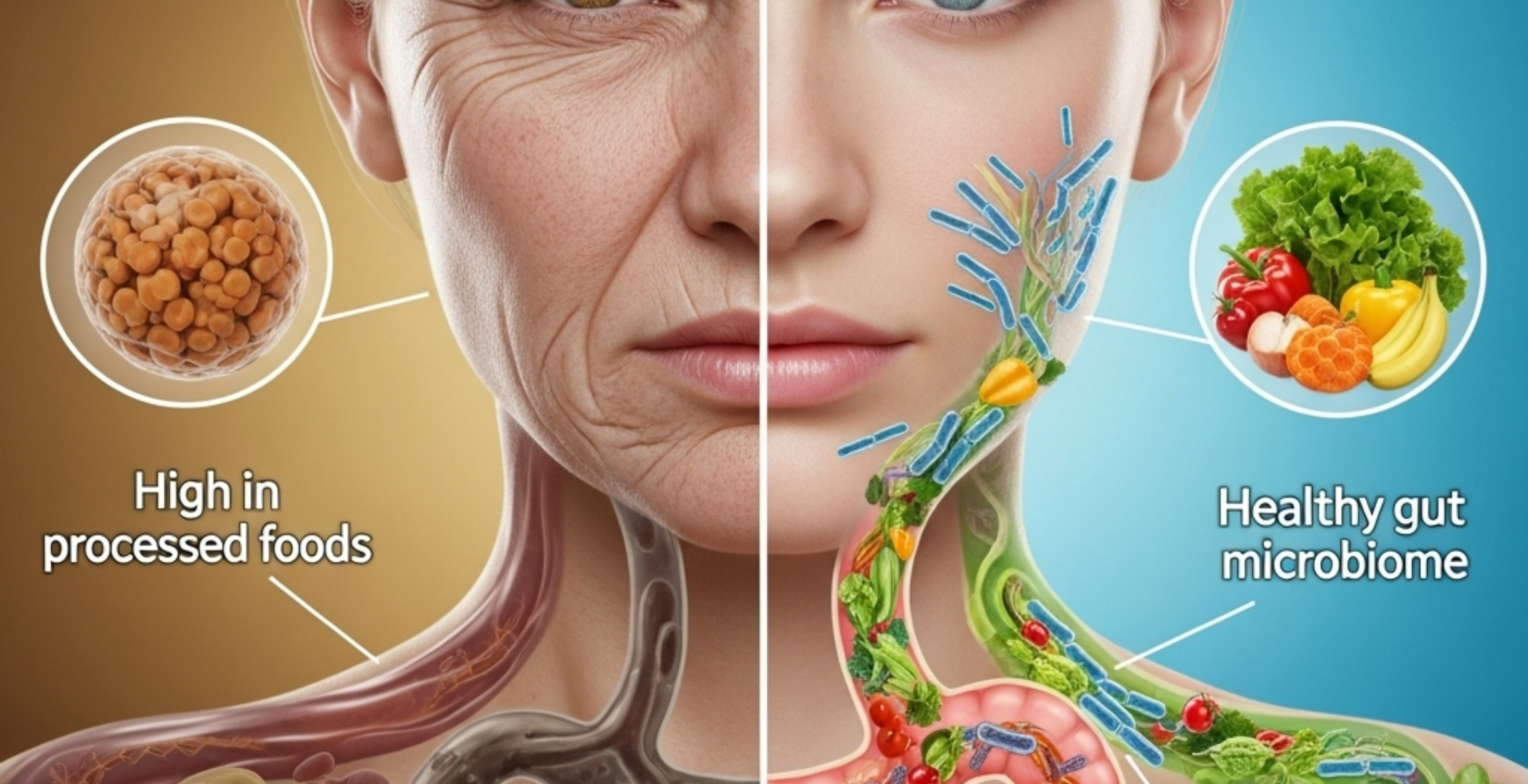
- Radiance Starts in the Gut: The Microbiome–Skin–Mind Axis
You may believe your skin’s glow depends solely on topical treatments—but in reality, your skin reflects the ecosystem within your gut. Conditions from acne and eczema to pigmentation and premature ageing are increasingly linked to dysbiosis, a disruption of the trillions of microbes inhabiting your digestive tract.
Scientific studies have identified several keystone gut microbes essential for youthful skin and emotional wellness:
- Lactobacillus reuteri – Boosts systemic oxytocin, essential for collagen formation and wound healing—mice studies show twice as fast skin repair post-injury. Oxytocin also supports skin hydration and stress resilience.
- Faecalibacterium prausnitzii – One of the main butyrate-producing microbes, suppressing NF‑κB and lowering pro-inflammatory cytokines like IL‑6. Clinical studies find reduced levels in psoriasis patients, suggesting a key gut–skin link.
- Bifidobacterium longum – Improves skin barrier function and reduces neurogenic inflammation in sensitive skin. Clinical trials show mood stabilization, lower stress, and better sleep—factors that indirectly support healthier skin .
- Lactobacillus helveticus & L. casei – Proven to reduce cortisol, anxiety, and enhance concentration, which supports skin repair and healing.
- Akkermansia muciniphila – Restores intestinal lining integrity and inhibits LPS‑mediated inflammation via the NF‑κB pathway. Significantly depleted in patients with skin conditions such as psoriasis, supporting its protective role.
Advanced technologies—Fractional laser, Co2 laser, Er:Glass laser, Ultrasound, RF, boosters, injectables, topicals or others, though are great to deliver result which is the hall mark of modern medicine, however, with microbiome-targeted nutrition to boost results from the inside out. Because radiant, youthful skin is not just surface-level—it’s a reflection of your inner microbiome terrain, which also profoundly influences your mental well-being.
- The Hidden Signs of Gut Imbalance
1 Skin Flare‑Ups That Don’t Heal
- Persistent acne, rosacea, pigmentation, and inflamed eczema often resist even the best topical treatments. These issues are frequently linked to metabolic endotoxemia, where lipopolysaccharide (LPS) from gut bacteria leaks into the bloodstream, triggering chronic, low-grade inflammation that degrades collagen and brightening the skin gradually. Aging is considered as a state of low grade inflammation.
- Mental Clarity—and Connection—Deteriorate
- Brain fog, anxiety, low mood, and intense sugar cravings may signal a disrupted gut-brain axis. Over 90% of the body’s serotonin is produced in the gut, and microbial imbalances can affect neurotransmitter production via the vagus nerve, directly impacting mood, focus, and stress resilience.
- Social anxiety and isolation have been shown to alter gut microbiota composition—and vice versa—with important implications for both mental health and skin resilience . Lactobacillus reuteri has been shown to increase oxytocin levels in the hypothalamus, which is linked to social bonding and empathy.
- Fatigue, Hormonal Whiplash & Beyond
- Chronic tiredness, mood swings, and food cravings often stem from gut-derived toxins that disrupt insulin and hormone balance.
- Metabolic endotoxemia can also impair muscle, bone, and metabolic health through increased TLR4 signaling and systemic inflammation
- The Skin-Gut-Ageing Axis
- Scientific evidence shows:
- SIBO & Skin Inflammation
Small Intestinal Bacterial Overgrowth (SIBO) can increase circulating LPS (endotoxin), burdening the liver and triggering inflammatory skin conditions such as rosacea. In one clinical study, treating SIBO with rifaximin led to complete rosacea remission in 20 out of 28 patients, with most maintaining results for months. An open-label 2024 trial also noted marked facial redness improvement after herbal gut therapy.
- Lactobacillus reuteri — The Collagen Booster
L. reuteri stimulates the production of oxytocin, a peptide hormone known to accelerate wound healing and collagen formation. Mice given L. reuteri healed wounds in half the time of controls and showed increased skin collagen deposition. Clinical reviews also highlight its role in systemic health—including skin integrity and stress resilience. - prausnitzii and A. muciniphila — Inflammation Fighters
Prebiotics and polyphenols enhance levels of Faecalibacterium prausnitzii and Akkermansia muciniphila, two key players in gut barrier integrity. Mouse models treated with either microbe showed improved dermatitis scores, reduced scratching behavior, and heightened skin protein (filaggrin) production. These bacteria are known to reduce systemic inflammation, protect the mucus lining, and inhibit endotoxin leakage.- Mental wellness benefits are strongest with helveticus, B. longum, and L. casei—notably reducing anxiety, depression, and enhancing cognitive clarity.
- For weight and metabolic support, gasseri and L. reuteri show promising results in waist reduction and appetite modulation.
4. Gut, Mind & Karma: Healing the Whole Self
Your microbiome isn’t just influencing your skin—it shapes your thoughts, resilience, social connections, and spiritual vibrancy.- L. casei — Mindfulness & Stress Resilience
- A 2023 study in Nutrients found that L. casei (strain HY2782) enhanced stress resilience in mice, reducing anxiety and depression by modulating BDNF and NF-κB pathways in the brain.
- Human data suggest L. casei Shirota improves sleep quality and cognitive clarity among stressed individuals, showing promise for academic and occupational performance under pressure.
- L. helveticus + B. longum — Hope, Mood & Emotional Balance
- Clinical trials using the probiotic pair helveticus R0052 and B. longum R0175 demonstrate significant reductions in anxiety and depressive symptoms in healthy adults and post-myocardial infarction patients.
- Animal studies reinforce these findings: long-term supplementation improved anxiety-like behavior and blunted stress hormone responses under dietary stress.
- Yoga, Pranayama & Meditation — Integrative Lifestyle Medicine
- Yoga-based lifestyle interventions reduce cortisol levels and inflammatory markers, while improving mindfulness, mood, and sleep quality.
- Meditation practices—such as those in Mindfulness-based Stress Reduction (MBSR)—are strongly associated with lowered anxiety and depression scores, enhanced focus, and increased emotional resilience.